
Summary
- VulnCheck says its UK honeypots recorded active exploitation of CVE-2026-0768 against Langflow systems.
- Observed activity queried environment data for Langflow credentials, AWS secrets, OpenAI API keys, and other access material.
- The incident shows how compromise of AI-development tooling can become a credential and cloud-infrastructure problem rather than remaining inside the AI application itself.
Attackers are exploiting a critical vulnerability in Langflow and probing affected environments for cloud credentials, OpenAI API keys, and administrative secrets, according to attack telemetry from vulnerability intelligence company VulnCheck.
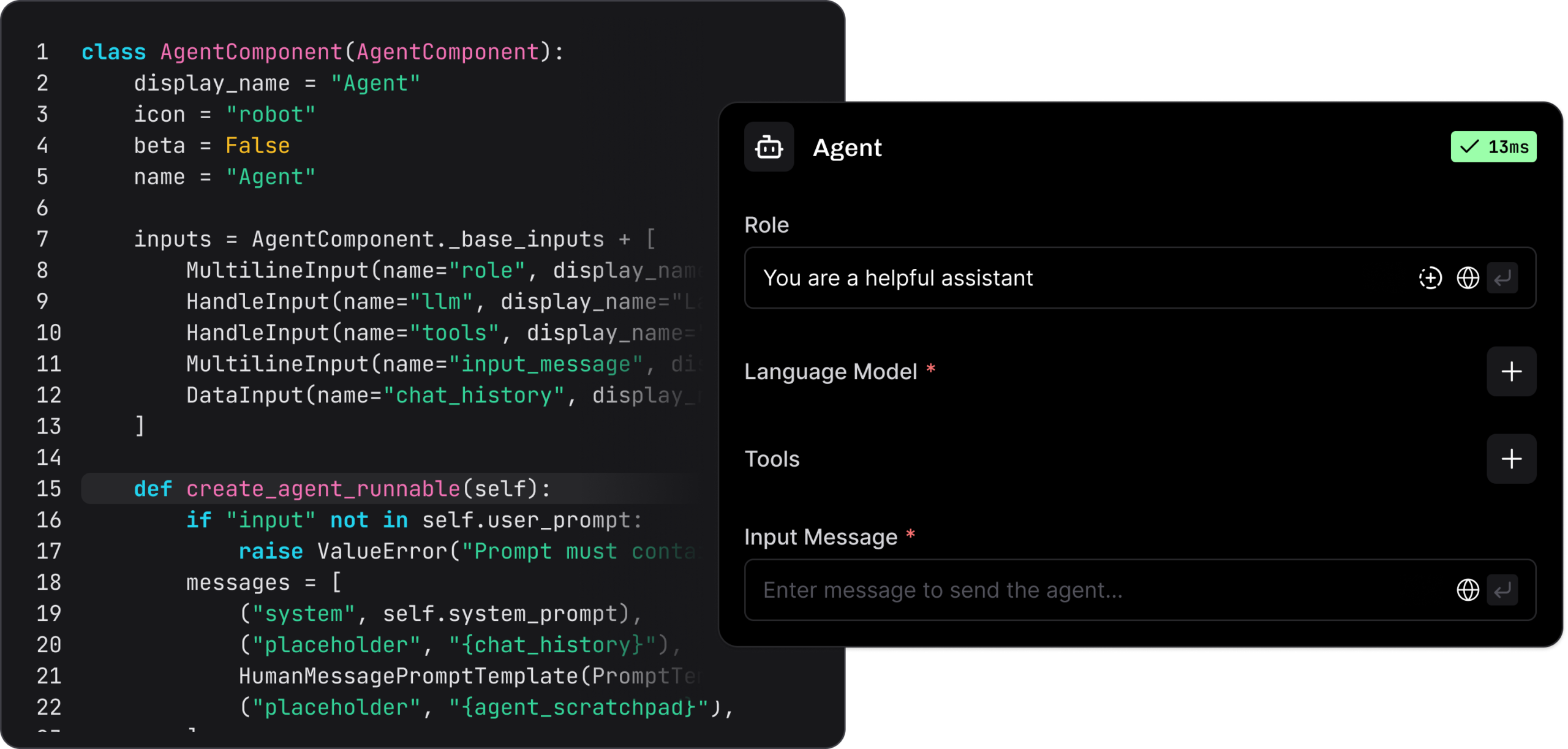
CVE-2026-0768 is an unauthenticated remote-code-execution vulnerability affecting the validation mechanism used by older versions of Langflow’s custom component editor. The open-source Python framework is used to build AI applications, agents, chatbots, and retrieval-augmented generation workflows.
VulnCheck had already developed an exploit for the vulnerability as part of its research and identified close to 2,500 internet-exposed Langflow instances overall. Subsequent activity observed by its UK honeypots indicates that attackers are now using the flaw against live targets.
VulnCheck told BleepingComputer that its sensors initially recorded at least 50 exploitation attempts over a weekend, later rising to 360 observed attacks. The company said attacker requests were examining environment variables and local data that could reveal Langflow administrative credentials, AWS access material, OpenAI API keys, SSH-related information, and other secrets.
The observations establish hostile activity against VulnCheck’s infrastructure, not the compromise of named UK organisations. No victims have been identified in the evidence reviewed by Cyber Insider, and the geographic location of the honeypots should not be treated as evidence that the campaign is specifically targeting Britain.
The credential harvesting is more significant than the vulnerability’s location inside an AI-development tool might initially suggest. Platforms such as Langflow are designed to connect models, APIs, databases, vector stores, and other services into working applications. Those integrations often depend on credentials passed through configuration or environment variables.
Code execution inside the development platform can consequently become a route towards systems well beyond the vulnerable application. An OpenAI key can expose model usage and associated resources; AWS credentials may grant access to cloud services according to the permissions attached to them; administrative Langflow secrets can open further control over the platform itself.
The problem is not unique to AI software. Development tools have long accumulated secrets because they need to connect multiple services. AI application platforms increase the density of those connections by bringing model providers, cloud infrastructure, databases, third-party APIs, agents, and data stores together in one workflow.
That makes credential scope and isolation part of the blast radius of a platform vulnerability. A Langflow instance using narrowly scoped credentials and separated infrastructure presents a different downstream risk from one where broad cloud privileges or production secrets are available to the process.
The incident also reflects the pace at which AI-development infrastructure is being exposed to conventional application-security failures. Langflow may be marketed around agents and model orchestration, but CVE-2026-0768 is fundamentally an input-validation failure leading to code execution. Attackers do not need a novel AI technique if ordinary web exploitation provides access to a process already holding valuable credentials.
VulnCheck’s earlier research described the vulnerability as critical and unauthenticated, lowering the barrier to attacks against reachable systems. The new telemetry indicates that at least some adversaries have moved beyond scanning and are actively looking for secrets after obtaining execution.
That progression turns the story from another flaw in a rapidly developing AI framework into a broader infrastructure issue. The sensitive asset is not simply the Langflow installation but the web of credentials and services connected to it.
The available evidence does not establish how many real organisations have been compromised, whether stolen keys have been used elsewhere, or who is responsible for the activity. What it does show is a repeatable attack path from exposed AI-development software to the credentials underpinning cloud and model-provider access — a familiar security failure appearing inside a newer part of the enterprise technology stack.



