Summary
- EcoStruxure Cybersecurity Admin Expert 4.2.0 and earlier inadequately protects credentials used to administer operational technology security policies.
- Schneider Electric has corrected CVE-2026-14354 in version 4.2.1, with a host reboot required after installation.
- Compromise of an engineering workstation or administration server could extend an attacker’s access into devices managed through the platform.
Schneider Electric has patched a vulnerability in EcoStruxure Cybersecurity Admin Expert that could allow a privileged local attacker to bypass authentication controls, modify credentials, and compromise devices administered through the software.
Versions 4.2.0 and earlier are affected by CVE-2026-14354, an insufficiently protected credentials weakness assigned a CVSS v3.1 score of 7.5 and a CVSS v4.0 score of 8.7. Version 4.2.1 corrects the problem, and Schneider Electric requires the host system to be rebooted after the update.
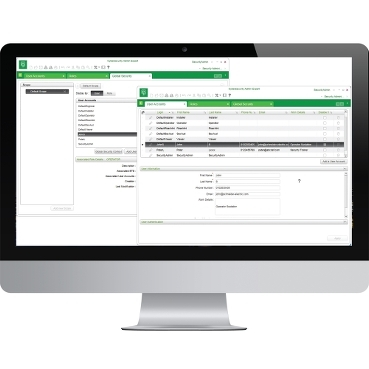
EcoStruxure Cybersecurity Admin Expert is used to configure and manage cybersecurity policies across electrical operational technology environments. It can hold administrative authority over several managed devices, placing the software and its host inside a particularly sensitive part of the industrial architecture.
Exploitation requires local access, high privileges, and a comparatively complex attack path, rather than exposing the product directly to an unauthenticated internet attacker. No exploitation in operational environments has been disclosed.
Once an attacker has reached an engineering workstation or administrative server, however, the affected credential controls could support movement into devices managed by the platform. A product designed to centralise security administration can also centralise access, policy information, and credentials that would otherwise be distributed across individual assets.
France’s CERT-FR has classified the possible outcome as a security-policy bypass and directed operators to Schneider Electric’s remediation guidance. The vendor’s security bulletin advises customers to install version 4.2.1, restrict local access to trusted users, and apply strict operating-system permissions to application files.
Customers are also advised not to share the host between mutually untrusted users and to monitor application data for unauthorised changes until the update has been installed. Schneider Electric recommends testing the release in a development environment and creating backups before deployment.
Controlled testing is a routine part of industrial maintenance because an update may interact with engineering software, drivers, device configurations, and formal change procedures. Those dependencies can delay deployment even when a corrected version is available, particularly where the host supports commissioning or maintenance across several production areas.
Security-management platforms, engineering stations, asset servers, and remote-maintenance systems often hold broader permissions than individual controllers. An attacker who compromises one of those systems may gain a route across an industrial estate without exploiting each device separately.
The local privilege requirement therefore needs to be assessed against the actual operating environment. Shared engineering workstations, contractor access, weak administrative separation, and limited endpoint monitoring can turn a nominally local weakness into a credible path towards operational assets.
Software used for commissioning or policy administration may also sit outside mainstream enterprise inventory and patch-management processes. An automation supplier may maintain the application, another organisation may own the host, and an operational team may control the connected devices, leaving responsibility for the update divided across several parties.
Operators should identify installations, establish who administers each host, verify local access controls, and test the corrected release against representative configurations. Following installation and reboot, managed policies, credentials, and device connectivity should be checked before the system returns to normal service.
Where the update cannot be deployed promptly, the restrictions set out in Schneider Electric’s bulletin should be recorded as temporary controls with an identified owner and review date. Version 4.2.1 provides the direct remediation, while access restrictions reduce exposure during the maintenance window.