Summary
- More than 250 participants from over 40 countries are taking part in Crossed Swords 2026.
- The exercise introduces AI agents into a training environment combining cyber and military operations.
- Human oversight, operational timing, and critical infrastructure protection are central to the scenarios.
The NATO Cooperative Cyber Defence Centre of Excellence has introduced AI agents into a multinational military cyber exercise in Estonia, testing their use alongside human operators during operations requiring close coordination with conventional military activity.
Crossed Swords 2026 is taking place in Tallinn from 2 to 6 November, bringing together more than 250 participants from over 40 NATO and non-NATO countries. The exercise involves military personnel, national cyber units, technical specialists, and civilian partners.
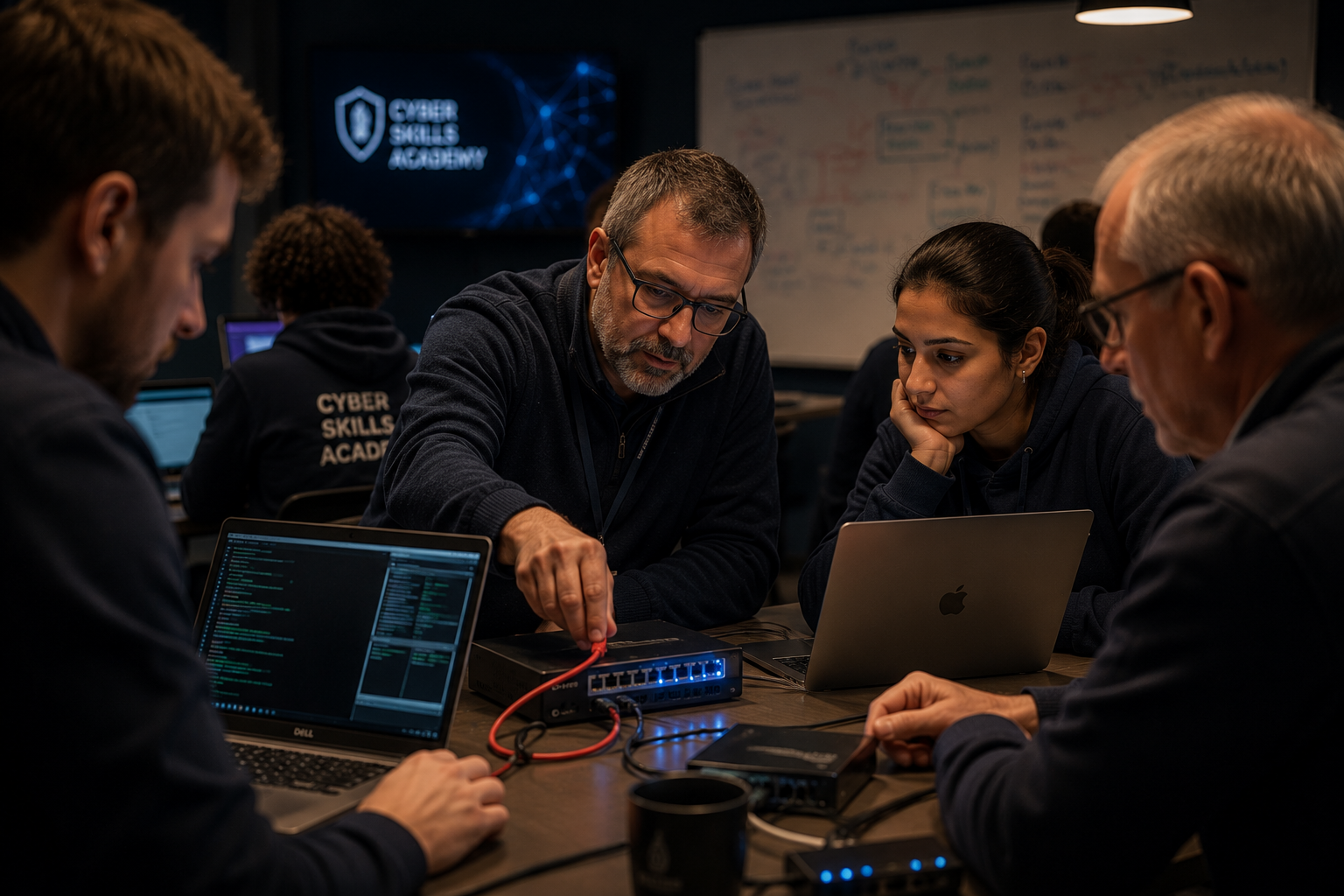
The NATO Cooperative Cyber Defence Centre of Excellence has introduced a dedicated training stream in which participants build, deploy, and assess AI agents while learning to operate alongside them. The environment includes locally hosted AI capabilities and specialist tools supplied by participating organisations.
The agents are being examined as part of an operational training programme, rather than deployed in an active military campaign. Their introduction adds another element to exercises that already require cyber specialists and military commanders to coordinate actions across different environments.
Coordinating cyber and military activity
Crossed Swords develops offensive and defensive cyber capabilities while testing their integration with conventional military operations. This year’s programme is also linked to a special operations forces exercise, placing greater emphasis on the timing and coordination of different activities.
Exercise Director Jozef Kostelansky has identified synchronisation as a central challenge. Cyber operations intended to support other military activity must produce their effects at the appropriate moment, with delays potentially affecting the wider operation.
Introducing AI agents into that environment changes how tasks can be distributed between technical specialists and automated systems. An agent may be able to analyse information, complete sequences of actions, or assist with technical workflows, but its outputs still need to fit within an operational plan overseen by human personnel.
The exercise therefore involves more than evaluating whether an AI tool can complete a cybersecurity task. Participants must also consider when its actions occur, how the results are communicated, and whether the information available to commanders is sufficient to support decisions.
Those requirements become more demanding when several teams are operating simultaneously. An automated system may complete a technical action quickly while other participants still need time to assess the consequences for connected systems or the wider mission.
Civilian infrastructure forms part of the exercise
National cyber forces are working alongside civilian partners, reflecting the operational dependencies that exist between military activity and privately operated infrastructure.
More than 20 organisations from industry, academia, and the non-governmental sector are supporting the exercise with technical expertise, platforms, and training resources. Their participation provides access to capabilities and systems beyond those held within military organisations.
Critical infrastructure protection is incorporated into the scenarios, requiring participants to consider services whose disruption could have consequences outside the immediate military environment.
Modern infrastructure often relies on interconnected operational systems, commercial software, specialist suppliers, and remote management capabilities. Cyber operations affecting one element of that environment can have consequences for several organisations, even where the initial activity is narrowly targeted.
AI-assisted operations introduce additional questions about control and accountability. Automated tools may operate at a pace that makes conventional step-by-step supervision impractical, particularly when analysing large volumes of technical information or responding to changing conditions.
In a military setting, that creates a need for clearly defined authority, reliable reporting, and mechanisms for checking whether automated behaviour remains consistent with the intended operation.
Crossed Swords provides a controlled environment for examining those questions without exposing operational infrastructure to an actual conflict.
The exercise has developed considerably since beginning as a red-teaming workshop in 2014. Its current format combines technical activity with command-level training, recognising that cyber operations depend on decisions made across several organisational levels.
Participants will continue evaluating the AI training stream and wider operational scenarios until the exercise concludes on 6 November.