
Insights
-

Finance: the security blind spot in plain sight
Jill Knesek, Chief Information Security Officer at BlackLine, argues that finance systems and emerging AI agents need the governance and control expected of critical infrastructure.
-

Why your identity database is your biggest liability (and what’s replacing it)
Stefan Deiss, CEO and Co-Founder of The Hashgraph Group, argues that verifiable credentials and distributed ledgers can reduce the risks created by centralised identity databases.
-

The AI builder boom is creating a shadow IT crisis
Gil Geron, CEO of Orca Security, argues that AI-built applications and agents are expanding shadow IT into production cloud environments faster than governance can keep up.
-

The energy sector cyber security strategy: why leadership must act now
Rafael Narezzi, CEO of Centrii, argues that the UK’s energy cyber strategy makes resilience a leadership and operational priority, not a deferred compliance task.
-

Stop buying resilience. Start building it
Dan Wood, Group CISO at Cyberfort, argues that resilience depends as much on people, governance, and live supply chain visibility as on security tooling.
-

Why cybersecurity must evolve for the age of AI agents
Vishal Salvi, Global Head of Cybersecurity Services at Cognizant, argues that AI agents need identity, access controls, monitored context, and governance before organisations can safely scale autonomy.
-
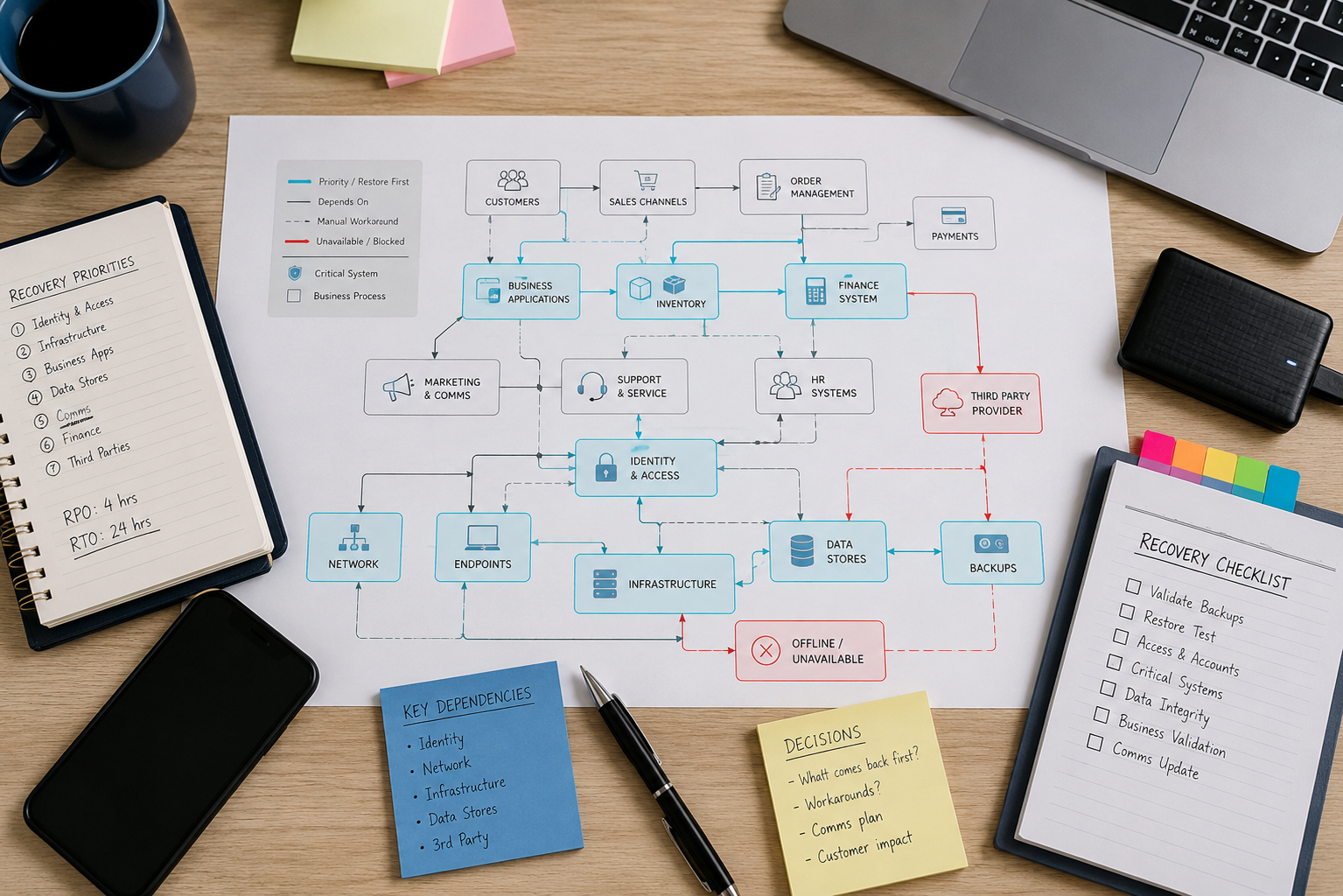
The backup myth: why copied data won’t save your business
William Thackray, Operations Director of AGT Computer Services, argues that backups alone cannot prove ransomware resilience unless restoration is tested against operational reality.
-

Fragmented Quantum Timelines Are Leaving Long-Life Data Exposed
Fragmented post-quantum cryptography deadlines are leaving long-life data exposed. Daryl Flack, Partner at Avella Security, argues that boards must treat quantum readiness as long-term resilience.
-

Universities face a student-platform security reckoning
Recent exploitation activity and the Nottingham incident have renewed attention on student records platforms, where universities concentrate identity, finance, academic, alumni, and international-campus data.
-

Another reminder that retired protocols are an active risk
Check Point’s exploited VPN flaw shows how deprecated remote access protocols can remain live inside security infrastructure long after retirement should have removed them.