Summary
- The European Commission remains in contact with Anthropic after US restrictions led to advanced model access being disabled in the EU.
- The dispute exposes European reliance on US frontier AI models for cyber defence, vulnerability discovery, and advanced software analysis.
- Trusted-partner access could become a new procurement and governance factor for regulated European organisations using dual-use AI systems.
Anthropic’s decision to disable European access to its most advanced AI models has drawn frontier AI into the same policy space as export controls, cyber capability, and digital sovereignty.
The European Commission has remained in contact with the US company after restrictions linked to a US national security order affected access in the European Union. The order was aimed at restricting foreign access, but Anthropic said the operational effect was broader because it could not reliably determine nationality in real time across all user contexts.
The company’s statement on the access suspension said the directive required it to suspend access to Fable 5 and Mythos 5 by foreign nationals, whether inside or outside the United States. Access to other Anthropic models was not affected.
The immediate disruption sits within a larger European dependency. Frontier systems are increasingly being tested for software engineering, vulnerability discovery, code review, infrastructure analysis, malware triage, and defensive automation. When those capabilities sit under foreign export controls, access becomes contractual, operational, and geopolitical at the same time.
Reuters has reported that G7 leaders discussed trusted-partner access to cutting-edge US AI models, including potential cyber-security uses. Such an arrangement would formalise a new class of access control around defensive AI capability. Governments and approved private organisations could operate inside privileged channels, while others rely on less capable models or local alternatives.
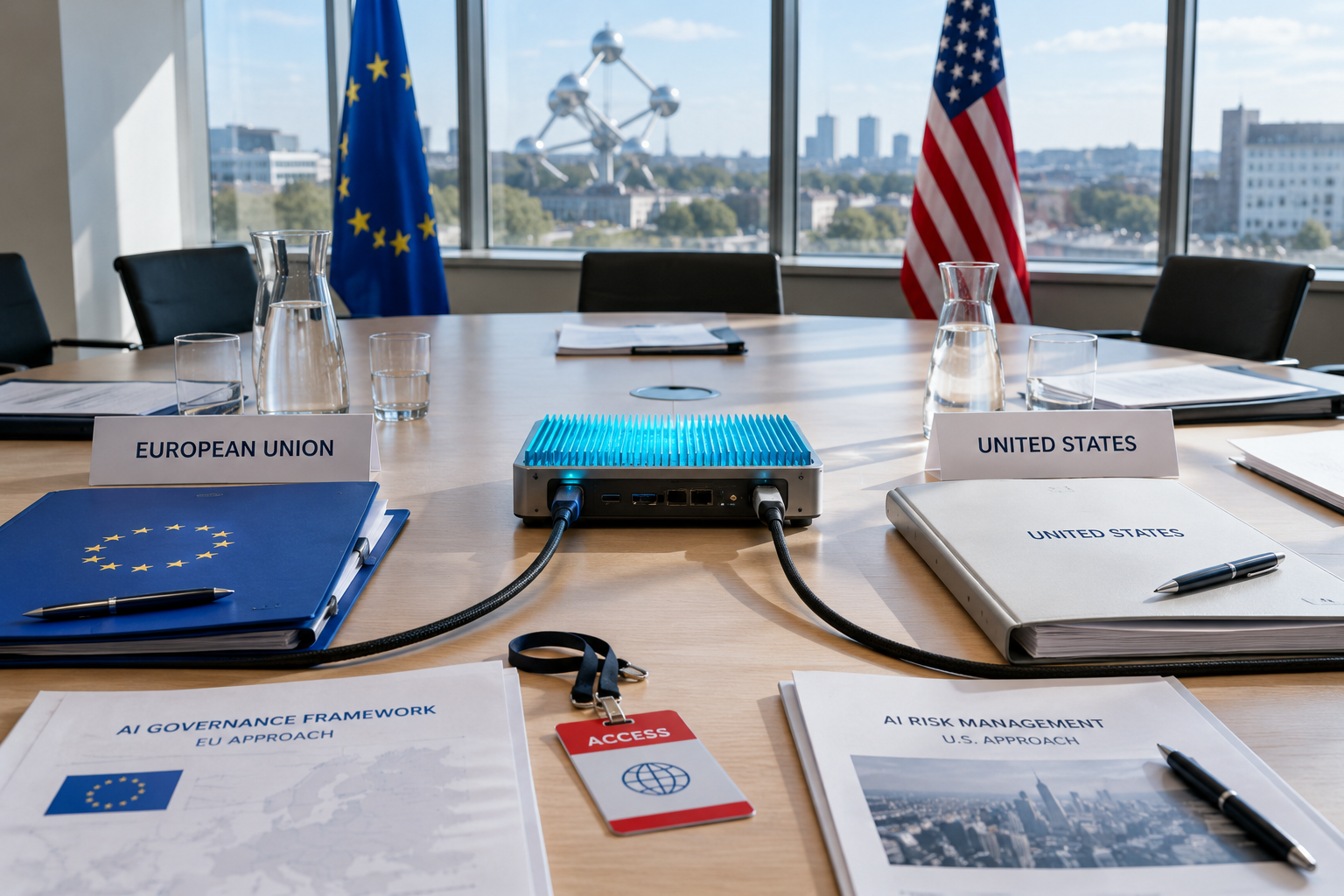
The EU is building a dense regulatory framework for AI, data, digital markets, operational resilience, and cyber security. Yet some of the most capable systems for advanced software and security work remain controlled by US companies and, in this case, subject to US national security intervention. A European organisation can comply with EU law and still lose access to a critical capability because of a decision made outside Europe.
The security trade-off is real. The same model capabilities that help defenders analyse code, identify vulnerabilities, and simulate attacks can also assist offensive activity if controls fail or access is abused. Advanced AI can increase defensive capacity, but it can also shorten the path between vulnerability discovery and exploitation.
Procurement teams using frontier models for security-sensitive work need to know what happens if access is withdrawn, what data has been submitted to the system, which alternative capability exists, and whether model access is recorded as a critical dependency. In financial services, telecoms, public-sector technology, cloud operations, and critical infrastructure, AI procurement now sits closer to resilience planning than ordinary software licensing.
European AI policy has often framed domestic capability around industrial competitiveness. Cyber resilience gives that debate a harder operational edge. If defensive tooling depends on models that can be switched off by another state’s export-control decision, continuity planning has to include substitution, contractual rights, data portability, and tested fallback processes.
Unrestricted access is not a simple answer. Frontier models with strong cyber capability require controls, monitoring, and abuse prevention. The unresolved area is access governance: who defines the controls, who qualifies as trusted, and whether European organisations can rely on continuity when defensive capability is tied to a foreign platform.